Co-op & Multiplayer Guide
Vampire Survivors: Legacy of the Bloodmoon expands the survivor-style action into full cooperative play, letting friends team up locally or online to face the ever-growing hordes of the Bloodmoon together. Whether you are pairing up for a duo run or assembling a full squad, multiplayer transforms the core experience with shared progression, role-based strategies, and powerful synergy builds that can only be achieved through coordination.
Multiplayer Modes Overview
Legacy of the Bloodmoon supports both local couch co-op and online multiplayer. In local mode, up to four players can join on a single screen using separate controllers, with the camera dynamically adjusting to keep all survivors in view. Online mode allows players to host or join sessions through invite codes or a friends list, with cross-platform support between PC and console versions.
Private lobbies let you set run parameters such as stage selection, Bloodmoon intensity, and whether to enable friendly-fire on area-of-effect weapons. Public matchmaking is also available for those seeking quick sessions, automatically grouping players of similar progression levels to ensure fair and enjoyable runs.
Setting Up a Co-op Session
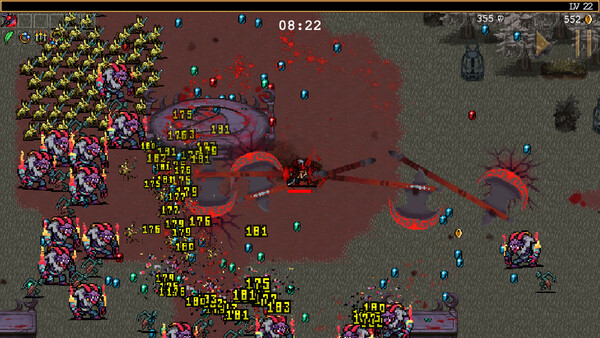
To start a co-op session, navigate to the Multiplayer tab on the main menu and select either Host or Join. Hosts can configure the session's stage, difficulty modifier, and player count before generating an invite code. Players joining only need to enter the code or accept a direct invitation through their platform's friends system.
All players in a session retain their own individual progression, including gold earned, achievements unlocked, and character experience gained. However, the host's stage-unlock status determines which maps are available. If a player disconnects mid-run, their character remains on the field as an AI-controlled ally for a short grace period, giving them time to rejoin without losing progress.
Team Roles and Strategies
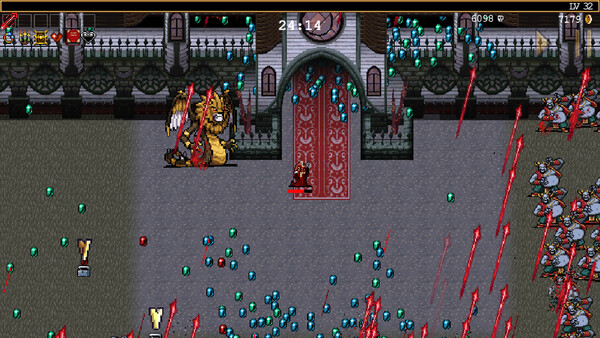
Effective co-op play in Legacy of the Bloodmoon benefits greatly from defined team roles. A common framework divides players into Sweepers, who focus on wide-area damage to clear standard mobs; Anchors, who prioritize defensive passives and healing auras to keep the team alive; and Bursters, who stack single-target damage for elite and boss encounters.
Communication and positioning are critical, especially on maps with environmental hazards introduced by the Bloodmoon mechanic. Spreading out maximizes experience gem collection across the field, but grouping up becomes essential when the Bloodmoon phase triggers and enemy density spikes dramatically. Coordinating your tightening and expanding as a unit is the hallmark of a skilled co-op squad.
During Bloodmoon surges, designate one player to kite dangerous elites away from the group while the remaining players focus fire. This divide-and-survive approach prevents the squad from being overwhelmed and ensures that at least one player is always in a safe position to revive or rally.
Best Co-op Synergy Builds
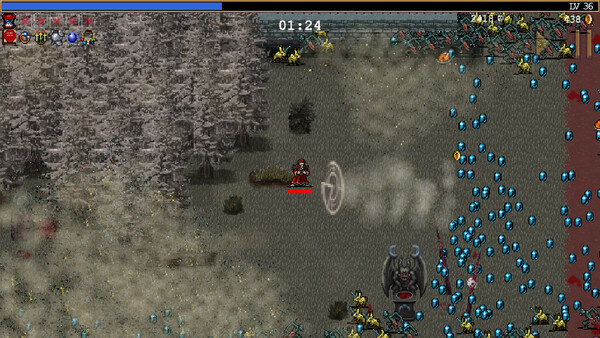
The strongest co-op builds exploit passive aura stacking and complementary weapon evolutions. When one player invests in area-of-effect crowd control and another focuses on projectile-based burst damage, the team covers both sustained clearing and spike damage without overlapping too heavily on item pickups. Pairing characters whose starting weapons naturally evolve into complementary forms makes early-game itemization far smoother.
Aura-sharing passives are uniquely powerful in multiplayer. Certain evolved accessories extend their stat bonuses to nearby allies, meaning a dedicated support build can amplify the entire team's damage output and survivability simultaneously. Stacking multiple aura-carriers in a full squad creates a rolling zone of empowerment that trivializes even the hardest Bloodmoon stages.
For duo runs specifically, consider pairing a high-mobility character with a tanky, slow-moving survivor. The mobile player scouts ahead for treasure chests and draws aggro, while the heavy hitter holds a central position and mows down anything funneled their way. This asymmetric playstyle keeps both players engaged with distinct responsibilities throughout the run.
Multiplayer-Specific Tips
Experience gems in co-op are not duplicated — they are shared on a first-pickup basis. To level efficiently, avoid clustering together early in the run. Spread across the map so each player vacuums a separate section of gem drops, ensuring the team collectively gains levels faster than any solo player could.
Reviving is possible in co-op when a player's health reaches zero. Downed players enter a brief vulnerable state during which a teammate can approach and hold the interact button to bring them back. Prioritize revives during lulls between waves, as the revive animation leaves both players temporarily exposed. Carrying at least one defensive or invincibility-frame item on every build is strongly recommended to make safe revives possible under pressure.
Finally, keep in mind that enemy scaling in multiplayer adjusts based on player count. More players means denser hordes, faster elite spawns, and more aggressive boss patterns. A four-player session is not simply four times easier than solo — it demands genuine teamwork, smart build diversity, and constant awareness of your teammates' positions on the battlefield.